
Why Lenders Request an Elevation Certificate at Closing
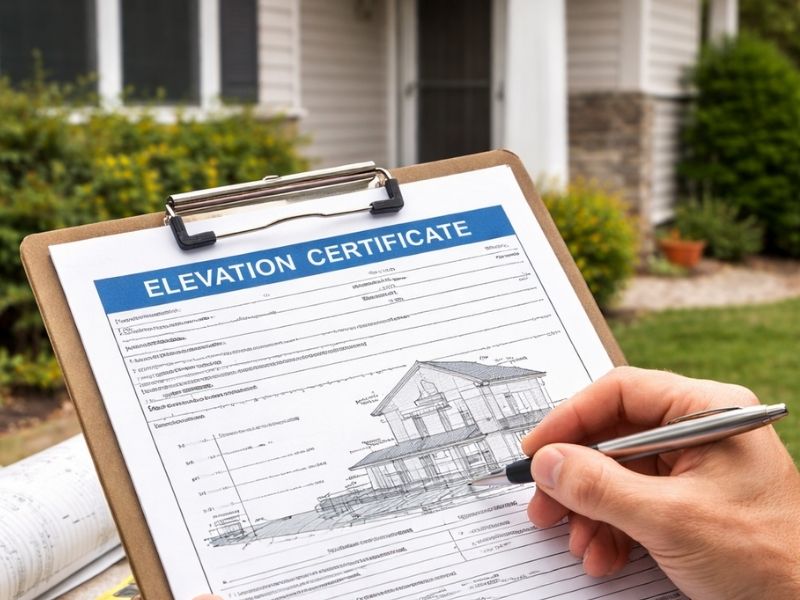
Developers who’ve been through a closing in a flood-prone area know the feeling. Everything is lined up, financing, permits, timelines, and then the lender asks for an elevation certificate. If you don’t have one ready, the closing slows down. Sometimes it stops completely.
This article explains exactly why lenders require this document, what it contains, and what developers need to know before they reach the closing table.
What an Elevation Certificate Actually Is
An elevation certificate is an official document prepared by a licensed land surveyor. It records the elevation of a structure relative to the Base Flood Elevation (BFE) set by FEMA for that specific area.
The BFE is the flood level that has a 1% chance of being reached or exceeded in any given year. If your finished floor sits below that line, your property is considered high-risk. If it sits above it, your flood insurance costs drop significantly.
The certificate doesn’t just say “high” or “low.” It records specific numbers: the elevation of the lowest finished floor, the lowest adjacent grade, any attached garage floors, and utilities. Lenders and insurers use those numbers to make real decisions.
Why Lenders Ask for It at Closing
They Need to Know the Flood Risk Before Funding
Lenders are putting money into a property. If that property sits in a Special Flood Hazard Area (SFHA), federal law under the National Flood Insurance Reform Act requires the lender to verify flood insurance is in place before closing. To confirm the right coverage is secured, they need accurate elevation data.
Without an elevation certificate, neither the lender nor the insurer can confirm the flood risk is properly priced. That creates liability the lender won’t accept.
It Determines Whether Flood Insurance Is Required at All
Not every property in a flood zone automatically requires flood insurance. The elevation certificate can show that a structure sits high enough above the BFE that the mandatory purchase requirement doesn’t apply.
On the flip side, it can also confirm that flood insurance is required and that the current coverage amount is correct. Either way, the lender needs that confirmation in writing before funds are released.
It Protects the Collateral
A lender’s primary concern at closing is whether the collateral, the property, holds its value. A building that floods regularly doesn’t hold its value. By requiring an elevation certificate, the lender gets documented proof of where the structure sits relative to flood risk. That documentation protects the loan.
What the Certificate Contains That Lenders Actually Review
Lenders and their insurance reviewers look at a few specific sections.
Section C records building elevation information. This is the core of what lenders care about: the elevation of the lowest floor, the lowest adjacent grade, and any enclosures.
Section D is completed by the licensed surveyor and includes their professional certification. Lenders won’t accept an elevation certificate that isn’t signed and sealed by a licensed professional.
Section E covers buildings that are elevated on crawlspaces or enclosures. For developers building in coastal or flood-prone areas, this section often determines the flood zone rating.
The numbers in these sections feed directly into the flood insurance rating engine. A difference of one foot in elevation can mean thousands of dollars per year in insurance costs.
How It Affects the Loan Terms
This is the part developers often underestimate.
If the elevation certificate shows the structure is below the BFE, the flood insurance premium will be high. That affects the debt service coverage ratio for commercial loans. It affects the monthly payment calculations for residential loans. In some cases, it makes the deal less attractive to the lender.
If the certificate shows the structure is at or above the BFE, the developer may qualify for lower insurance rates. That changes the financial picture in the other direction, sometimes enough to improve loan terms.
Getting the elevation certificate early, not at the last minute, gives developers time to respond to what the numbers show.
When Developers Should Order the Elevation Certificate
Not at closing. That’s the short answer.
Order it after construction is substantially complete and the finished floor elevations are set, but before the closing process begins. Surveyors need access to the completed structure to take accurate readings.
If you’re developing in a known flood zone, build the elevation certificate into your project schedule the same way you’d schedule a final inspection. Treat it as a required closeout step, not an afterthought.
Frequently Asked Questions
What is an elevation certificate and why does a lender need it?
An elevation certificate is a document prepared by a licensed land surveyor that records a building’s elevation relative to FEMA’s Base Flood Elevation. Lenders use it to confirm flood risk, verify that the correct flood insurance is in place, and protect the value of the property they are financing.
Does every property need an elevation certificate at closing?
Not every property requires one. Lenders typically require it for properties located in a Special Flood Hazard Area or when flood insurance is part of the loan conditions. Your lender or title company will confirm whether it’s required for your specific transaction.
Who prepares an elevation certificate?
Only a licensed land surveyor can prepare and certify an elevation certificate. The document must carry the surveyor’s professional seal to be accepted by lenders and insurers.
Can an elevation certificate lower flood insurance costs?
Yes. If the certificate shows the finished floor elevation is above the Base Flood Elevation, the flood insurance premium will typically be lower. In some cases, it can also support a FEMA Letter of Map Amendment, which may remove the property from the flood zone entirely.
When should a developer order an elevation certificate?
Order it after construction is substantially complete but before closing begins. Don’t wait for the lender to ask for it. Having it ready in advance keeps the closing on schedule and gives you time to address any issues the numbers reveal.