
Why a Professional Land Surveyor Should Check Easements Before You Build
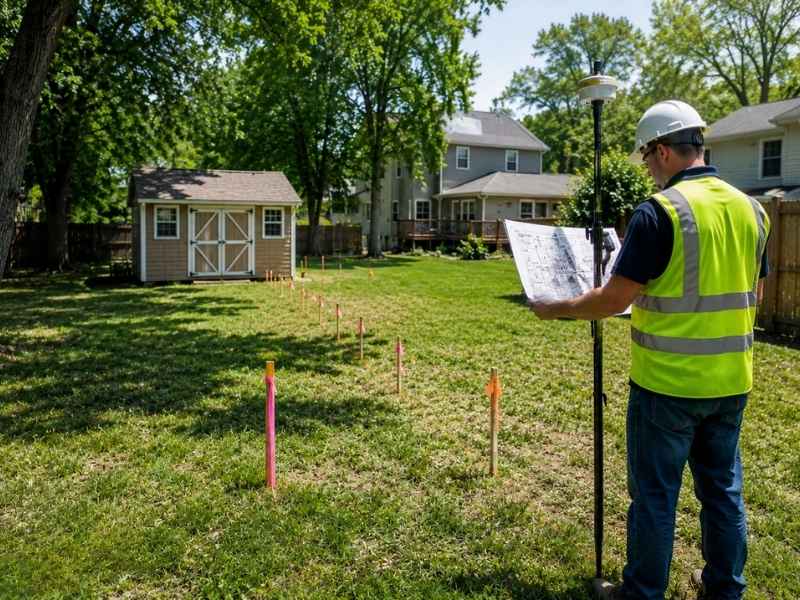
A professional land surveyor can identify easements on your property before any construction begins. Easements give certain people or companies the legal right to use part of your land for a specific purpose. They don’t disappear when a property changes hands. If you build in the wrong spot without checking for them first, you may face a costly correction later. Knowing where easements sit before a project starts keeps planning on solid ground.
Why Easements Can Affect Your Building Plans
An easement sets aside part of your property for someone else’s use. That portion of the lot is off-limits for certain types of construction, even though you own the land. The easement holder has legal rights to that area, and those rights don’t require your permission to enforce.
Some easements run across the front of a lot. Others cut through the middle or along a side yard. The location matters a lot for building plans. A homeowner may have plenty of room on paper but far less usable space once easement areas are factored out. Finding that out after a contractor is already scheduled creates a problem. Finding it out beforehand keeps the project on track.
How a Professional Land Surveyor Traces Easement Boundaries on the Ground
Finding an easement in a written record is only part of the job. The other part is showing exactly where that easement sits on the physical lot. That’s where field work comes in.
After reviewing property documents, the surveyors take measurements in the field and tie the easement’s legal description to actual ground positions. They confirm the easement’s starting point, its direction, and its width based on what the recorded documents describe. Then they mark those positions on a survey drawing alongside the property boundary.
That drawing is what makes the easement usable for planning. Without it, a homeowner looking at a written easement description has no practical way to know which corner of the yard it crosses, how wide the restricted corridor is, or how close a planned shed or addition can get before running into a problem.
Easement Types That Create the Most Building Conflicts
Not all easements create the same planning issues. Some sit in areas that homeowners rarely use. Others run directly through the parts of a lot where construction is most likely to happen.
Drainage easements are one of the more common sources of conflict on residential lots. They often run through rear yard areas, which is exactly where homeowners tend to plan patios, sheds, and additions. A drainage easement doesn’t just restrict what you build there. It may also require that the ground surface stay open so water can move freely.
Access easements create a different problem. If a neighboring property has a recorded right to cross part of your lot, that corridor needs to stay clear. Building a fence, a retaining wall, or a driveway extension across an access easement can block a legal right that another party depends on.
Conservation easements, found on some older or rural lots, may restrict grading, clearing, or any permanent structure across a defined portion of the property. These are easy to miss during a title search if the homeowner doesn’t know what to look for.
What a Permit Review Reveals When an Easement Is in the Way
Many homeowners first learn about an easement problem during the permit review process, not before. When a permit application includes a site plan showing a proposed structure, the reviewer checks it against recorded easements on file. If the footprint overlaps an easement corridor, the permit may be delayed or denied until the conflict is resolved.
Resolving that conflict after a design is already drawn usually means starting the design over. The contractor may already be scheduled. Materials may already be ordered. Both of those costs land on the homeowner. A survey done before the design phase gives the exact easement location upfront, so the site plan avoids the conflict before it ever reaches a permit office.
Questions to Ask Before Building Near an Easement
Before starting any project near an easement, ask these specific questions to understand what’s allowed and where the limits are.
- Where is the easement located and how wide is it? Width matters because some easements are ten feet wide while others span twenty-five feet or more. Knowing the exact corridor keeps the project out of a restricted zone.
- What does the easement allow? A drainage easement has different restrictions than an access easement or a conservation easement. The type determines what can and can’t be built nearby.
- Does any part of the planned project fall inside the easement? A surveyor can compare the proposed building footprint against the recorded easement location and confirm exactly how much separation exists.
- Do local permit requirements include easement setbacks? Some areas require structures to sit a minimum distance from easement boundaries, in addition to keeping the easement area itself clear.
Getting answers to these questions before construction starts is far easier than working around a conflict after a structure is already in place.
Frequently Asked Questions
What is the purpose of an easement?
An easement gives a person or company the legal right to use part of a property for a specific reason, such as accessing utility lines, draining water, or crossing the land. The property owner still owns the land, but the easement holder has defined rights to that portion.
Can utility workers enter my property because of an easement?
Yes. A recorded utility easement gives the utility company the right to enter that specific area of your property when maintenance, repairs, or upgrades are needed. That right exists regardless of any structures nearby, though those structures may need to be moved to allow access.
Do easements affect where I can place a shed or garage?
Yes. A shed or garage built inside an easement area may conflict with the easement holder’s access rights. Depending on the type of easement and local rules, some structures may be prohibited in that zone entirely, while others may require special approval.
Are easements listed in property records?
Most easements are recorded in deeds, plat maps, or other legal documents kept on file with the county. A professional land surveyor reviews those records and ties the easement location to measurable points on the ground.
Can a professional land surveyor explain how an easement affects my plans?
Yes. After reviewing property records and completing field measurements, a surveyor can show you where an easement sits on your lot and how much of your planned project falls within or near that area. That information helps you adjust plans before construction begins.