What an ALTA Survey Shows About Easements
A commercial property can look perfect at first glance. The lot seems large. The building fits your plans. There is space for parking, signs, or future expansion. So, you move forward with the deal.
Then the problems show up.
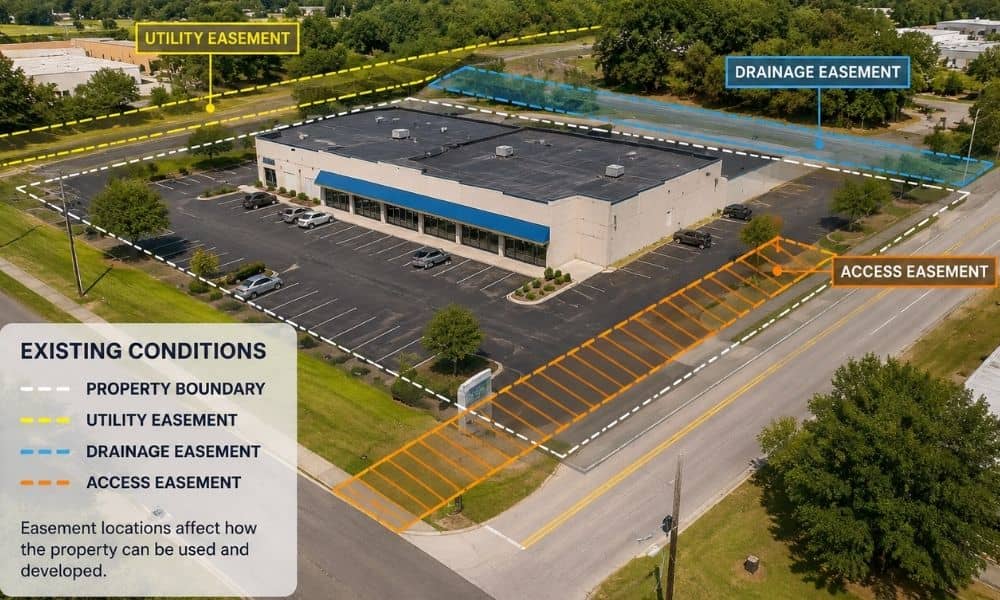
A utility company may have rights to part of the land. A neighboring business may share access through the property. Drainage lines may run under areas you planned to build on.
Suddenly, the property does not work the way you expected.
This is why many buyers order an ALTA survey before closing on commercial property. It helps uncover easements and other issues before money changes hands. Many lenders also require an ALTA survey before approving commercial real estate financing.
What you learn early can save you from major problems later.
What Is an Easement in an ALTA Survey?
An easement gives another party legal rights to use part of a property for specific purposes like utilities, drainage, or access. An ALTA survey helps identify these easements before a commercial property purchase so buyers can understand how they may affect future construction, parking, expansion, or site access.
An easement gives someone else the right to use part of a property for a specific reason.
That sounds simple. However, easements can affect how the land works in real life.
Some easements allow utility companies to access power lines or underground pipes. Others allow nearby properties to share driveways or access roads.
In many cases, the easement stays attached to the land even after ownership changes. That means the new buyer must deal with it too.
For example, you may buy a commercial lot planning to expand the parking area. Later, you learn that a utility easement runs directly through the space where the new pavement should go.
Now the project changes.
Why Easements Matter Before Buying Commercial Property
Easements can limit how commercial property owners use their land. They may affect parking layouts, building additions, drainage systems, truck access, and redevelopment plans. An ALTA survey helps buyers identify these restrictions before closing so they can avoid expensive surprises later.
Commercial land usually has more moving parts than residential property.
Businesses need parking, truck access, drainage systems, signs, and room for customers. Every part of the site matters.
Because of that, even a small easement can create a big problem.
A shared driveway may limit traffic flow. A drainage easement may stop future expansion. A utility easement may block new construction.
These problems often stay hidden until design work begins. That is why buyers should not wait until after closing to look deeper into the property.
Instead, they should understand the site before making a final decision.
What an ALTA Survey Shows About Easements and Property Access
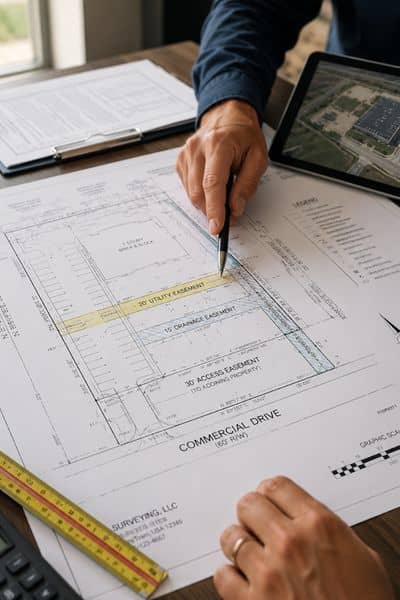
An ALTA survey compares legal title documents with actual site conditions. It can reveal recorded easements, shared access routes, utility areas, encroachments, and conflicts between documents and real-world property conditions before a commercial property purchase moves forward.
ALTA surveys follow standards created by the American Land Title Association (ALTA) and the National Society of Professional Surveyors (NSPS).
This survey does much more than show boundary lines.
An ALTA survey can reveal:
- recorded easements
- access routes
- utility areas
- encroachments
- shared driveways
- visible improvements
- conflicts between documents and field conditions
The survey also works closely with title documents. That matters because some easements may appear in legal records but not stand out during a simple walk around the property.
Without an ALTA survey, buyers may miss important restrictions tied to the land.
That mistake can become expensive later.
How Utility Easements Can Limit Commercial Property Use
Utility easements may restrict where owners can build, pave, expand, or install new improvements on commercial property. An ALTA survey helps identify these areas early so buyers understand how utility access rights may affect future development plans.
Utility easements create some of the biggest surprises during commercial property purchases.
Many buyers focus on the building itself. However, utility companies often control parts of the land around it.
Common utility easements shown on an ALTA survey include:
- water lines
- sewer systems
- underground electrical lines
- communication cables
- storm drainage systems
The land may still look open and usable. Yet the easement can limit what gets built there.
For example, you may want to add:
- extra parking
- a dumpster enclosure
- outdoor seating
- storage space
- a building addition
Then you discover the utility company needs access through that exact area.
Now your plans change completely.
This happens more often than people think.
Why Access Easements Matter Before Buying Commercial Property
Access easements allow neighboring properties or businesses to legally cross part of a property. These agreements can affect traffic flow, parking design, deliveries, and redevelopment plans. An ALTA survey helps buyers identify these shared access rights before closing.
Some commercial properties depend on shared access.
One property may need to cross another lot to reach the road. Nearby businesses may share entrances, driveways, or loading areas.
At first, that may not seem like a problem.
However, shared access can affect traffic flow, parking design, deliveries, and future redevelopment.
Imagine buying a corner property for a retail business. You plan to redesign the parking lot and improve traffic movement.
Then the ALTA survey shows that a neighboring business has legal access rights through part of the lot.
Now you cannot fully control the property layout.
That changes the value of the land and the design options moving forward.
Why Lenders and Title Companies Require ALTA Surveys
Lenders and title companies often require ALTA surveys because they help confirm legal access, identify easements, verify property boundaries, and reduce commercial real estate risk before financing and title insurance move forward.
Lenders want to reduce risk before approving large commercial loans. Title companies want clear information before issuing title insurance.
That is why many commercial deals require an ALTA survey.
The survey helps confirm:
- legal access
- property boundaries
- easements
- visible site conditions
- possible conflicts
Title companies also use ALTA surveys to help identify risks that may affect title insurance coverage.
It also helps buyers understand whether the property matches the title records.
If problems appear early, the buyer can address them before closing instead of dealing with surprises later.
That protects everyone involved in the transaction.
Why Buyers Should Identify Easement Problems Before Closing
Easement problems can delay construction, increase redesign costs, reduce usable land, and create long-term property restrictions. An ALTA survey helps commercial property buyers uncover these issues early before permits, financing, or development plans move forward.
Many buyers think about today’s use of the property. However, future plans matter too.
A site may work fine right now. Still, easements can limit future improvements later.
This becomes a bigger issue in growing commercial areas where owners want to:
- expand buildings
- redesign parking
- improve drainage
- add outdoor features
- redevelop older properties
Older commercial properties often contain easements created decades earlier that may not match modern redevelopment plans.
Without an ALTA survey, buyers may not discover these restrictions until architects, engineers, or contractors begin planning work.
At that point, redesign costs can rise quickly.
Commercial property costs too much to rely on guesses.
A property may look open, simple, and ready for development. Yet hidden easements can change how the land functions.
That is why an ALTA survey matters before closing.
It helps buyers see restrictions that may affect construction, access, parking, drainage, and long-term property use.
More importantly, it gives buyers a clearer picture of what they are actually purchasing.
Finding these issues early gives you more control, more confidence, and fewer surprises after closing.
That can save time, money, and major frustration later on.