
Thinking About Building? This Is Why a Topographic Survey Comes First
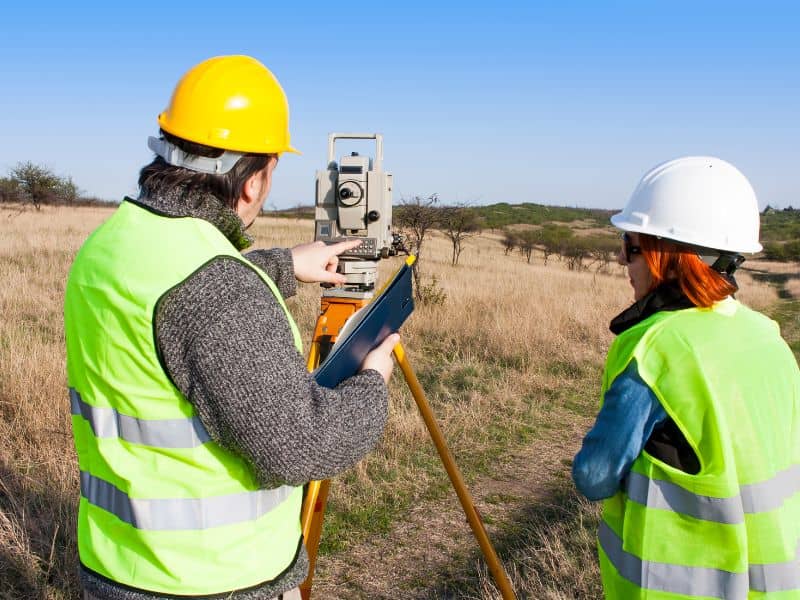
If you are planning to build, the first document your project needs is a topographic survey. Not a floor plan. Not a permit. A topo survey. It is the map that tells you and your builder what the land actually looks like before anything is designed or constructed. In a city with 67 inches of rain per year and significant coastal flood risk, getting this step right can save you thousands of dollars and a lot of headaches.
What Is a Topographic Survey?
A topographic survey is a detailed map of your land that shows its shape, elevation, and physical features. It uses contour lines and spot elevations to show where the ground rises, where it drops, and how water moves across the surface.
Think of it as a 3D picture of your property drawn on paper. A standard boundary survey tells you where your lot lines are. A topographic survey goes further. It shows what the land inside those lines actually looks like: its hills, its low spots, its drainage paths, and its relationship to neighboring properties.
Surveyors use GPS equipment, total stations, and sometimes drones to measure elevation at dozens or hundreds of points across your property. Those measurements are turned into a map that architects, engineers, and contractors use to design your project safely and correctly.
What Does a Topographic Survey Include?
A topographic survey includes contour lines, spot elevations, natural features like trees and drainage channels, and man-made features like fences and driveways. All elevations are tied to a national benchmark standard so they can be compared directly to FEMA flood maps.
A standard topo survey will show:
- Contour lines. Lines that connect points of equal elevation. Lines that are close together mean a steep slope. Lines that are far apart mean flat ground.
- Spot elevations. Exact elevation readings at key points such as lot corners, driveways, and low areas.
- Natural features. Trees, ditches, swales, and waterways that affect how rain drains off the property.
- Man-made features. Existing buildings, fences, driveways, and utility lines.
- Benchmark elevation. A reference point tied to NAVD 88, the same standard FEMA uses for its flood insurance maps.
When Do You Need a Topographic Survey?
You may need a topographic survey before building a new structure, adding a major addition, designing a drainage system, applying for a building permit, or checking your property’s FEMA flood zone status.
A topo survey is especially useful if you are:
- Building a new home or commercial building on a vacant lot
- Adding a pool, garage, or large addition to an existing property
- Planning a landscaping or drainage improvement project
- Applying for a building permit
- Trying to understand your flood zone or challenge a FEMA flood map designation
- Buying land and want to understand the property before making a purchase
Why Topographic Surveys Matter More in Mobile Than Most Cities
Mobile gets around 67 inches of rain per year, making it one of the wettest cities in the United States. The city sits near Mobile Bay and is surrounded by low-lying coastal land. A 2026 study published in Science Advances by researchers at the University of Alabama specifically named Mobile as one of the Gulf Coast cities where residents face significant flood risk.
Elevation is not just a technical detail here. It directly affects your flood insurance premiums, your ability to get a mortgage, and the long-term safety of your home. According to FEMA, about 25% of all National Flood Insurance Program claims come from properties outside officially designated high-risk flood zones. That means even if your neighbor has never flooded, your specific elevation could still put you at risk.
Topo Surveys and FEMA Flood Maps: How They Connect
FEMA’s Flood Insurance Rate Maps use elevation data to assign flood zones. If your finished floor elevation is below the Base Flood Elevation (BFE) for your area, your insurance premiums will be significantly higher. A topographic survey tied to NAVD 88 gives your surveyor the data needed to complete a FEMA Elevation Certificate. In some cases, it also supports a Letter of Map Amendment (LOMA), which can remove your property from a flood zone entirely and lower your insurance costs.
How Much Does a Topographic Survey Cost?
A residential topographic survey typically costs between $1,500 and $4,000. The price depends on lot size, terrain difficulty, contour interval required, and the type of deliverable your engineer or architect needs.
Key factors that affect cost:
- Lot size. Larger properties take more time to survey.
- Terrain. Wooded, marshy, or uneven land takes longer to work through in the field.
- Contour interval. A 1-foot interval requires more measurements than a 2-foot interval.
- Deliverable format. A full CAD file or digital terrain model costs more than a standard paper map.
For comparison, fixing a drainage problem after construction is already complete can cost $10,000 to $30,000 or more. A topo survey at the start is a small investment that prevents very large surprises.
Start Your Build the Right Way
In Mobile, the ground has a story. Before you build, buy, or renovate, a topographic survey makes sure you understand it. It protects your investment, informs your design, and can save you from expensive problems that are hard to fix once construction has started.
Frequently Asked Questions
How long does a topographic survey take?
Most residential topographic surveys are completed within one to two weeks from the time of scheduling. Larger or more complex properties may take a little longer depending on terrain and weather.
Is a topographic survey the same as a boundary survey?
No. A boundary survey shows your property lines. A topographic survey shows the shape and elevation of the land inside those lines. Many construction projects require both, and a licensed surveyor can often complete them together.
Do I need a topographic survey to get a FEMA Elevation Certificate?
Yes. A FEMA Elevation Certificate requires precise elevation data from a licensed surveyor. That data is the same information collected during a topographic survey. Your surveyor can often complete both at the same time, which saves you time and money.