
Land Survey for Fence Replacement After Storm or Drainage Damage
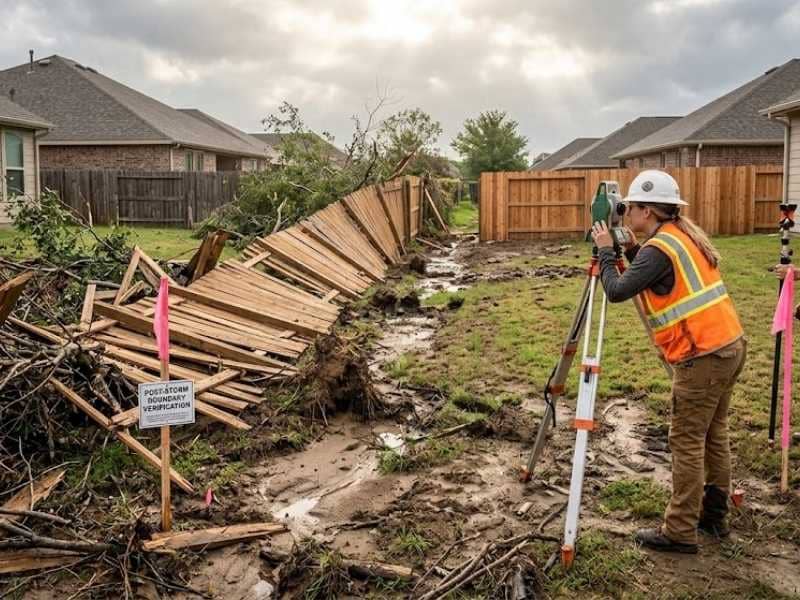
A storm can flatten a fence in minutes. Before you rebuild, a land survey for fence work is worth the short wait. Storm and drainage damage can shift the soil, wash out posts, and hide the markers that show where your fence belongs. A survey reads the ground as it is now, not as it was. That way your new fence sits in the right spot and stands up to the next big rain.
Why You Need a Land Survey for Fence Replacement
A bad storm often carries off the old fence and the clues that came with it. Posts snap, corner markers vanish under debris, and the line you once trusted is hard to find. On top of that, the soil around the old footings may have moved or washed away. A land survey for fence work pins down where the fence should go and records how the ground sits now. With both in hand, you rebuild once instead of fixing the same fence twice.
How Storms Can Change Your Yard
Strong storms do more than knock things over. Heavy rain can strip topsoil, carve small gullies, and wash out the dirt that once held your posts. Wind and flooding push soil from one part of the yard to another, so high spots flatten and low spots fill in. A few inches of lost ground near a fence line can leave posts loose or leaning. A survey maps these changes, so you can see exactly what the storm moved.
How Drainage Can Affect Fence Placement
Water that sits too long is hard on a fence. Soggy soil grips posts poorly, so they shift, tilt, and rot faster. When water pools along the same line after every rain, a fence built there tends to fail early. Good drainage keeps the ground firm and the posts steady. A survey shows where water collects and where it drains, so you can set the fence on solid ground instead of a wet spot.
Avoid Property Line Problems With Neighbors
Replacing a fence is the moment many people rebuild in the wrong place. Storm debris can hide markers, and the old fence may have drifted off the line over the years. If you rebuild to that old position, you might cross onto a neighbor’s land without meaning to. A property survey marks the true corners before you dig, so the new fence lands where it should. That keeps the rebuild simple and keeps the peace next door.
Plan a Strong Fence With the Right Survey
The best fence fits the land it sits on. Survey results show the grade, the low spots, and the way water moves across the yard. With that picture, you can place posts on firm, well-drained ground and leave gaps where water needs to pass. You can also set deeper footings where the soil stays soft. A fence planned around real conditions holds up far longer than one dropped in by eye.
Frequently Asked Questions
Why do I need a land survey for fence replacement?
A survey confirms your true property line and shows how the ground changed after the damage. That helps you rebuild in the right spot on stable soil, not on a guess.
Can a storm change my property lines?
No. A storm cannot move your legal property line, but it can destroy the markers and shift the soil that shows where the line falls. A survey re-establishes those points.
Will a survey show where my new fence should go?
Yes. It marks the corners and boundaries of your lot, so you know the exact area where the fence can sit. It also flags ground that may not hold posts well.
How do drainage problems affect a fence?
Standing water softens soil and loosens posts over time. A fence built where water pools tends to lean, shift, or rot sooner than one set on dry, firm ground.
How long does a land survey for a fence take?
Most residential fence surveys take a few days to a couple of weeks. Timing depends on the size of the lot, the records available, and how clear the corners are.
Should I get a survey before replacing my fence?
Getting a survey first is the safer choice, especially after storm or drainage damage. It confirms the line and the ground conditions before you spend money on posts and panels.