
Why Property Owners Still Run Into Problems Without an As Built Survey After Construction Ends
The building is finished. The crews are gone. The project looks done.
Then a problem shows up.
A driveway sits a few feet off plan. A utility line isn’t where everyone thought it was. Permit paperwork doesn’t match field conditions. Suddenly a completed project turns into a pile of phone calls and delays.
Many property owners think construction ends after the last inspection. It doesn’t. What was actually built on site still needs to match what was planned.
An as built survey helps show what exists in the field after work is complete. Missing that step can create issues long after equipment leaves the property.
This article explains where problems happen and why developers still request as built surveys before they close out projects.
What Is an As Built Survey?
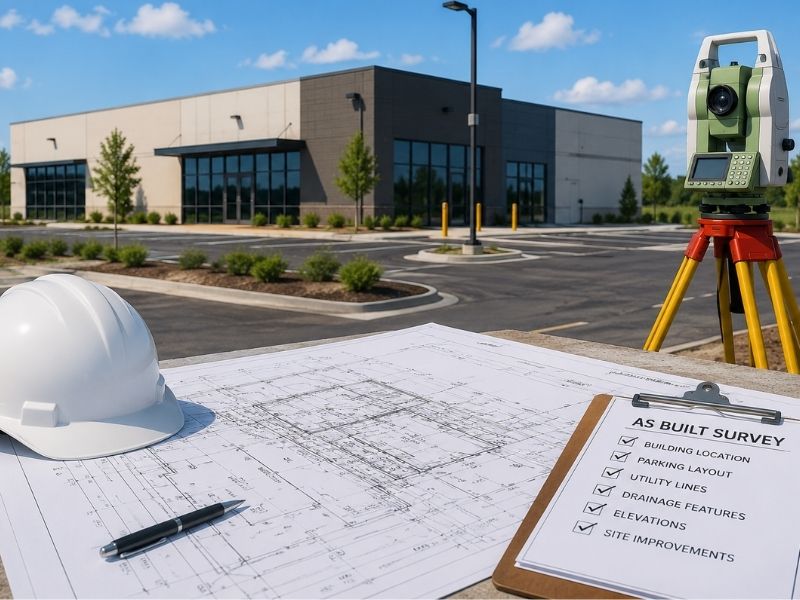
An as built survey records the finished layout of a project.
It documents where structures, utilities, roads, drainage features and site elements were actually placed.
Construction plans show intent. An as built survey is often part of broader construction survey services that help track what was actually built in the field. An as built survey shows reality.
Small differences happen during nearly every project. Grades shift. Layouts change. Field conditions force adjustments.
Those changes need documentation.
Why Construction Plans and Field Conditions Don’t Always Match
Projects rarely unfold exactly as drawn.
Crews run into unexpected conditions all the time.
Examples include:
- Existing utility conflicts
- Soil issues
- Grade changes
- Drainage concerns
- Design revisions
- Space limits on site
Changes happen fast during active construction.
Without updated records, people often rely on assumptions.
Assumptions create expensive problems.
Small Errors Can Turn Into Large Costs
A few inches may not sound serious.
On a project site, it can become a problem quickly.
Setback Issues
Buildings and structures must follow spacing requirements.
If a feature ends up outside approved setbacks, corrections may be required.
Utility Location Mistakes
Underground lines create problems years later.
Future contractors may dig where they shouldn’t.
That can damage infrastructure and stop work.
Drainage Problems
Poor elevation records create confusion.
Water always finds the low spot.
Small grading differences can lead to standing water and site complaints.
Future Projects Depend on Accurate Records
Many owners build in phases.
One project often leads to another.
An expansion. New parking. Utility upgrades. Site additions.
Future work relies on knowing what already exists.
Missing information slows planning.
Teams spend time searching for answers that should already exist on paper.
Permit and Closeout Problems Can Appear Late
Closeout paperwork matters.
Cities, engineers and agencies may ask for documentation showing that completed work follows approved plans.
Missing records create delays.
Developers sometimes discover this at the end of the project cycle. That is usually the worst time.
Crews are gone.
Schedules are tight.
Everyone wants signatures.
Property Sales Can Expose Missing Site Information
Property transactions often bring hidden problems to the surface.
Buyers ask questions.
Lenders ask questions.
Engineers ask questions.
Where are utility lines?
Was drainage installed correctly?
Were improvements built according to plan?
An as built survey helps answer those questions before deals slow down.
Signs a Property May Need an As Built Survey
Some projects carry greater risk.
Common examples include:
- Commercial developments
- Utility installations
- Large parking lots
- Road projects
- Drainage work
- Multi-phase developments
- Sites with field design changes
Projects with many moving parts create more chances for mismatch.
Good Records Save Time Years Later
Many problems do not appear right away.
Some show up during expansion work.
Others appear during permit reviews or property sales.
Years can pass before someone realizes important records are missing.
Finding answers later costs more.
Keeping accurate site records early usually costs less.
Property owners spend huge amounts on planning and construction. Skipping documentation at the finish line creates risk that sticks around long after the project ends.
Frequently Asked Questions
What does an as built survey show?
It shows the final location of structures, utilities and site features after construction is complete.
When is an as built survey completed?
Most are completed after construction work finishes and before project closeout.
Why do developers request as built surveys?
They help verify completed work and create records for future planning.
Can changes happen during construction?
Yes. Field conditions often create adjustments during active work.
Are as built surveys only for large projects?
No. Smaller projects can benefit too, especially when utilities or site improvements are involved.