↓
 

Mobile Land Surveying

...local land surveyors in Mobile, Alabama.

Mobile Land Surveying
  • Home
  • ALTA Survey Mobile AL
  • Boundary Survey
  • Construction Survey
  • Drone LiDAR Mapping
  • Elevation Certificate | Flood Survey
    • Flood Survey
  • Land Surveying
  • Lot Survey
  • Topographic Survey
  • Mobile County, AL
    • Mobile, AL
    • Alabama Port, AL
    • Bayou La Batre, AL
    • Calvert, AL
    • Chickasaw, AL
    • Citronelle, AL
    • Creola, AL
    • Dauphin Island, AL
    • Eight Mile, AL
    • Grand Bay, AL
    • Mount Vernon, AL
    • Prichard, AL
    • Saraland, AL
    • Satsuma, AL
    • Semmes, AL
    • Theodore, AL
    • Tillmans Corner, AL
  • Baldwin County, AL
    • Daphne, AL
    • Fairhope, AL
    • Foley, AL
    • Gulf Shores, AL
    • Bay Minette, AL
    • Bon Secour, AL
    • Elberta, AL
    • Loxley, AL
    • Magnolia Springs, AL
    • Orange Beach, AL
    • Perdido, AL
    • Perdido Beach, AL
    • Point Clear, AL
    • Robertsdale, AL
    • Silverhill, AL
    • Spanish Fort, AL
    • Summerdale, AL
  • Jackson County, MS
    • Pascagoula, MS
    • Gautier, MS
    • Moss Point, MS
    • Ocean Springs, MS
    • Vancleave, MS
  • Washington County, AL
    • Chatom, AL
    • Leroy, AL
    • McIntosh, AL
    • Millry, AL
    • St. Stephens, AL
  • Blog
  • Contact Us
Home - Page 5 << 1 2 3 4 5 6 7 … 11 12 >>

Post navigation

← Older posts
Newer posts →

How LiDAR Mapping Reveals Hidden Elevation Changes

Mobile Land Surveying Posted on May 20, 2026 by MobileSurveyorMay 19, 2026
Drone performing LiDAR mapping above a forested area with a digital terrain elevation scan revealing hidden ground contours

Land does not stay flat for long. Soil shifts. Water moves. Heavy rain cuts channels into the ground. Years of small changes can reshape a site without anyone noticing.

A property may look level during a quick walk-through. Then construction starts. Suddenly crews find drainage issues, slope problems, or low spots holding water.

LiDAR mapping helps uncover these hidden changes before they become expensive surprises. It gives developers a clearer picture of what the land is doing and what may happen next.

Small elevation changes can create big project problems. LiDAR mapping helps spot them early.

What Is LiDAR Mapping?

LiDAR stands for Light Detection and Ranging.

The process is simple. A scanner sends thousands of laser pulses toward the ground. Those pulses bounce back and measure distance.

The result is a highly detailed map of the land surface.

LiDAR can collect millions of elevation points in a short time. That creates a picture of the site that is far more detailed than what the eye can see.

Developers use LiDAR for:

  • Site planning
  • Road projects
  • Drainage studies
  • Land development
  • Flood studies
  • Large property mapping

How Hidden Elevation Changes Cause Problems

Tiny changes in height often go unnoticed.

A shift of a few inches may not seem serious. On a development site, it can create problems fast.

Water Starts Moving in New Directions

Water follows the slope.

Even slight elevation changes can send runoff toward roads, parking lots, or building pads.

That can lead to:

  • Standing water
  • Soil erosion
  • Drainage failures
  • Flood concerns

Many site problems begin with poor elevation data.

Grading Costs Increase

Developers estimate cut and fill volumes before work begins.

Bad elevation information creates bad numbers.

That often leads to:

  • Extra hauling
  • More equipment time
  • Added labor costs
  • Construction delays

Nobody enjoys finding out the dirt estimate was wrong.

How LiDAR Detects Changes People Miss

Walking a site has limits.

Trees block views. Brush covers low areas. Large properties make visual checks difficult.

LiDAR sees details hidden beneath surface conditions.

It Detects Small Ground Variations

LiDAR captures slight changes in elevation across large areas.

That includes:

  • Small depressions
  • Erosion paths
  • Surface ridges
  • Drainage channels
  • Slope breaks

These details often affect site design.

It Works Through Vegetation

Heavy vegetation can hide important terrain features.

LiDAR systems can collect enough data points to help reveal the ground beneath tree cover.

This matters for wooded sites and undeveloped land.

A site can look smooth from above while hiding sharp terrain changes below.

Places Where LiDAR Finds Elevation Issues

LiDAR becomes useful in many project types.

Development Sites

Before planning starts, teams need to understand site conditions.

LiDAR helps identify:

  • Low spots
  • Drainage paths
  • Existing slopes
  • Areas needing grading

Early information helps avoid redesigns later.

Flood-Prone Areas

Flood risk depends heavily on elevation.

Even small terrain changes can affect how water spreads during storms.

LiDAR data helps teams study flood behavior before construction starts.

Large Tracts of Land

Large sites take time to survey with traditional field methods.

LiDAR gathers information quickly across wide areas.

That speed helps development schedules stay on track.

LiDAR and Traditional Survey Methods Work Together

LiDAR does not replace survey crews.

Field survey teams still verify control points and property information.

LiDAR adds another layer of detail.

Together they provide:

  • Accurate elevation information
  • Site measurements
  • Boundary information
  • Surface conditions

Good projects depend on good data.

Poor site information causes expensive mistakes.

Why Developers Order LiDAR Early

Developers often focus on design first.

That can create problems.

Early mapping helps identify issues before engineering plans move ahead.

LiDAR can help answer questions like:

  • Does water naturally collect here?
  • Will grading costs increase?
  • Is this site truly level?
  • Are there hidden drainage concerns?
  • Will elevation changes affect design?

Finding answers early costs less than fixing problems during construction.

Frequently Asked Questions

What hidden elevation changes can LiDAR find?

LiDAR can detect low spots, erosion channels, drainage paths, small ridges, and subtle slope changes.

Can LiDAR see through trees?

LiDAR can gather enough data points to reveal ground conditions beneath vegetation in many areas.

Is LiDAR accurate?

LiDAR provides highly detailed elevation information when combined with proper survey control.

Does LiDAR replace land surveys?

No. Survey crews still provide field measurements, control points, and boundary information.

When should developers order LiDAR mapping?

Early in the planning process. Early mapping helps avoid surprises during design and construction.

Posted in land surveying | Tagged lidar mapping

Why Property Owners Still Run Into Problems Without an As Built Survey After Construction Ends

Mobile Land Surveying Posted on May 19, 2026 by MobileSurveyorMay 19, 2026
Survey equipment and construction plans beside a completed commercial property during an as built survey after construction work.

The building is finished. The crews are gone. The project looks done.

Then a problem shows up.

A driveway sits a few feet off plan. A utility line isn’t where everyone thought it was. Permit paperwork doesn’t match field conditions. Suddenly a completed project turns into a pile of phone calls and delays.

Many property owners think construction ends after the last inspection. It doesn’t. What was actually built on site still needs to match what was planned.

An as built survey helps show what exists in the field after work is complete. Missing that step can create issues long after equipment leaves the property.

This article explains where problems happen and why developers still request as built surveys before they close out projects.

What Is an As Built Survey?

An as built survey records the finished layout of a project.

It documents where structures, utilities, roads, drainage features and site elements were actually placed.

Construction plans show intent. An as built survey is often part of broader construction survey services that help track what was actually built in the field. An as built survey shows reality. 

Small differences happen during nearly every project. Grades shift. Layouts change. Field conditions force adjustments.

Those changes need documentation.

Why Construction Plans and Field Conditions Don’t Always Match

Projects rarely unfold exactly as drawn.

Crews run into unexpected conditions all the time.

Examples include:

  • Existing utility conflicts
  • Soil issues
  • Grade changes
  • Drainage concerns
  • Design revisions
  • Space limits on site

Changes happen fast during active construction.

Without updated records, people often rely on assumptions.

Assumptions create expensive problems.

Small Errors Can Turn Into Large Costs

A few inches may not sound serious.

On a project site, it can become a problem quickly.

Setback Issues

Buildings and structures must follow spacing requirements.

If a feature ends up outside approved setbacks, corrections may be required.

Utility Location Mistakes

Underground lines create problems years later.

Future contractors may dig where they shouldn’t.

That can damage infrastructure and stop work.

Drainage Problems

Poor elevation records create confusion.

Water always finds the low spot.

Small grading differences can lead to standing water and site complaints.

Future Projects Depend on Accurate Records

Many owners build in phases.

One project often leads to another.

An expansion. New parking. Utility upgrades. Site additions.

Future work relies on knowing what already exists.

Missing information slows planning.

Teams spend time searching for answers that should already exist on paper.

Permit and Closeout Problems Can Appear Late

Closeout paperwork matters.

Cities, engineers and agencies may ask for documentation showing that completed work follows approved plans.

Missing records create delays.

Developers sometimes discover this at the end of the project cycle. That is usually the worst time.

Crews are gone.

Schedules are tight.

Everyone wants signatures.

Property Sales Can Expose Missing Site Information

Property transactions often bring hidden problems to the surface.

Buyers ask questions.

Lenders ask questions.

Engineers ask questions.

Where are utility lines?

Was drainage installed correctly?

Were improvements built according to plan?

An as built survey helps answer those questions before deals slow down.

Signs a Property May Need an As Built Survey

Some projects carry greater risk.

Common examples include:

  • Commercial developments
  • Utility installations
  • Large parking lots
  • Road projects
  • Drainage work
  • Multi-phase developments
  • Sites with field design changes

Projects with many moving parts create more chances for mismatch.

Good Records Save Time Years Later

Many problems do not appear right away.

Some show up during expansion work.

Others appear during permit reviews or property sales.

Years can pass before someone realizes important records are missing.

Finding answers later costs more.

Keeping accurate site records early usually costs less.

Property owners spend huge amounts on planning and construction. Skipping documentation at the finish line creates risk that sticks around long after the project ends.

Frequently Asked Questions

What does an as built survey show?

It shows the final location of structures, utilities and site features after construction is complete.

When is an as built survey completed?

Most are completed after construction work finishes and before project closeout.

Why do developers request as built surveys?

They help verify completed work and create records for future planning.

Can changes happen during construction?

Yes. Field conditions often create adjustments during active work.

Are as built surveys only for large projects?

No. Smaller projects can benefit too, especially when utilities or site improvements are involved.

Posted in land surveying | Tagged as built survey

New Flood Study: How a Topographic Survey Can Protect You 

Mobile Land Surveying Posted on May 15, 2026 by MobileSurveyorMay 13, 2026
Flooded residential street showing standing water after heavy rainfall near low-lying homes

A new scientific study just put Mobile, Alabama on a list no homeowner wants to be on. Researchers at the University of Alabama published findings in the journal Science Advances in April 2026 showing that millions of Americans along the Gulf Coast face serious flood risk. Mobile was specifically named as one of the most vulnerable cities in the study. If you own property here, or are planning to build, this is the kind of news that should make you pay close attention to your land’s elevation. And that starts with a topographic survey.

What the Study Actually Found

A University of Alabama study published in April 2026 found that over 17.5 million Americans along the Gulf and Atlantic coasts are at the highest level of flood risk. Mobile, Alabama was named as one of the most vulnerable cities, alongside New Orleans, Houston, and Miami.

The research team used 16 different factors to calculate flood risk, including geographic hazards, population density, infrastructure exposure, and the vulnerability of residents themselves. They also pulled in historical flood damage data from FEMA and applied three separate artificial intelligence tools to model risk from Texas all the way to Maine.

The numbers they found were described by the researchers themselves as “alarming.”

  • 17.5 million Americans are at “very high” flood risk along the Gulf and Atlantic coasts
  • An additional 17 million are at the next level down, classified as “high” risk
  • In New Orleans, 99% of the city’s population falls within the flood risk zone
  • Mobile was named alongside Jacksonville, Houston, Miami, Norfolk, and Charleston as a highlighted city of concern

Study co-author Wanyun Shao, a climate scientist at the University of Alabama, put it simply. “Just look at the magnitude. Those numbers are shocking. Those numbers are alarming.”

For homeowners and developers, this is not abstract news. It is a direct signal that understanding your property’s elevation is no longer optional.

Why Mobile Is Especially Vulnerable

Mobile sits near Mobile Bay on low-lying coastal terrain and receives around 67 inches of rain per year, making it one of the wettest cities in the United States. Its geography makes accurate elevation data critical for anyone building or owning property here.

Mobile’s flood risk is not new. The city has always sat in a challenging position geographically. But the 2026 University of Alabama study reinforces what local surveyors and engineers have known for years. Small differences in elevation here are not minor details. They are the difference between a dry home and a flooded one, between an affordable insurance policy and a crippling annual premium.

The study’s researchers pointed to several factors that make Gulf Coast cities like Mobile particularly vulnerable.

  • Sinking land caused by natural ground subsidence over time
  • Dense urban development that replaces absorbent soil with hard surfaces
  • Aging drainage infrastructure that was not designed for current rainfall intensity
  • Proximity to tidal water that limits how quickly floodwater can drain

All of these factors interact with one central variable: the elevation of your specific property.

What a Topographic Survey Does That No Study Can Do For You

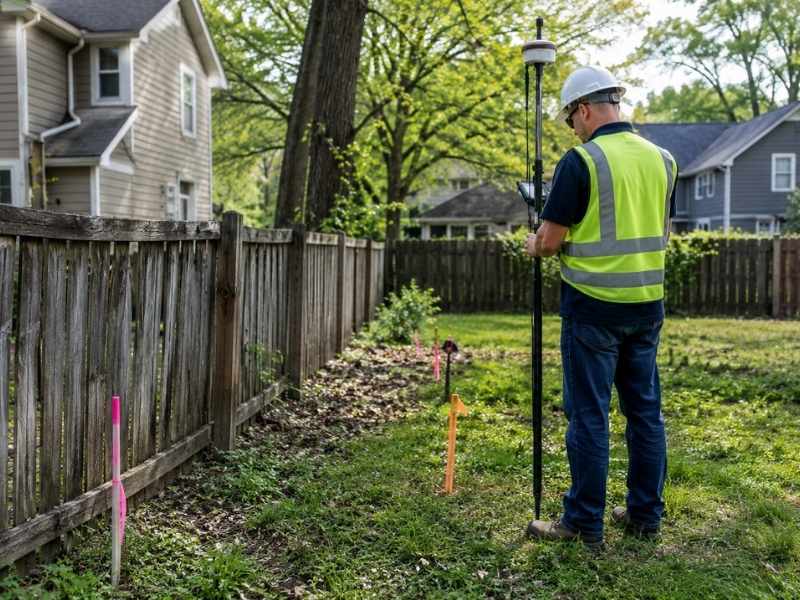
Surveyor performing a topographic survey near a residential drainage area

A topographic survey measures the exact elevation of your specific property and ties it to the same national standard FEMA uses for its flood maps. No regional study, no matter how comprehensive, can tell you what your individual lot’s elevation is. Only a licensed surveyor can do that.

The University of Alabama study is powerful because it looks at the big picture. But big-picture data cannot tell you whether your lot sits six inches above or six inches below the Base Flood Elevation for your street. That distinction determines your flood insurance rate, your mortgage requirements, and whether your finished floor ends up underwater after a heavy storm.

A topographic survey fills that gap. Here is what it gives you that the study cannot.

Your exact elevation, tied to FEMA’s standard. All topographic surveys are referenced to NAVD 88, the same vertical datum FEMA uses for its Flood Insurance Rate Maps. This means your surveyor can compare your property’s elevation directly to the Base Flood Elevation for your zone.

A drainage picture of your specific lot. The study identifies regional risk. A topo survey shows you how water moves across your individual property, where it pools, where it flows, and whether neighboring lots drain toward yours.

The data needed to fight a bad flood zone designation. If FEMA has placed your property in a high-risk flood zone but your elevation data shows you are actually above the Base Flood Elevation, your surveyor can use topo survey data to file a Letter of Map Amendment (LOMA) and potentially remove you from that zone. That one step can save hundreds or even thousands of dollars per year in insurance costs.

Documentation your builder needs before breaking ground. Architects and engineers use topo survey data to set your finished floor elevation correctly from the start. Getting this right before construction is far cheaper than correcting a drainage problem afterward.

The Real Cost of Ignoring Elevation 

According to FEMA, about 25% of all National Flood Insurance Program claims come from properties that are not even in officially designated high-risk flood zones. That means a flood map alone is not enough to protect you. Elevation data from a licensed surveyor is the only way to know where your property truly stands.

Post-construction drainage repairs, when a home is built at the wrong elevation or without proper grading, can cost $10,000 to $30,000 or more. A topographic survey, by comparison, typically costs between $1,500 and $4,000 for a residential lot in Mobile. It is one of the most cost-effective steps you can take before any project begins.

What to Do Next

The University of Alabama study is a wake-up call for homeowners. But knowing that Mobile faces flood risk in general is only useful if you take action at the property level.

A topographic survey is that action. It turns regional flood risk data into specific, usable information about your land. It tells you where you stand, literally, and gives your builder, architect, and insurer the accurate numbers they need to protect your investment.

Frequently Asked Questions

Does the flood risk study mean my property will flood?

Not necessarily. The study identifies regional vulnerability, not the fate of individual properties. Your specific elevation, drainage, and proximity to water all determine your actual risk. A topographic survey gives you that property-level data.

Can a topographic survey lower my flood insurance costs?

Yes, in some cases. If your survey shows your finished floor elevation is above the Base Flood Elevation for your area, that data can be used to complete a FEMA Elevation Certificate, which may reduce your premiums. It can also support a LOMA application to remove your property from a high-risk flood zone entirely.

Should I get a topo survey even if my property has never flooded?

Yes. As the study shows, 25% of flood insurance claims come from properties outside high-risk zones. Past flooding history does not guarantee future safety, especially as rainfall patterns shift and development changes how water moves through Mobile’s landscape.

Posted in land surveying | Tagged topographic survey

Post navigation

← Older posts
Newer posts →

Contact Form

    © Copyright Mobile Land Surveying
    (...a T. Brandon Bailey, PLS marketing website.)
    208 Mohawk Street
    Mobile, AL, 36606
    Phone: (251) 281-2081

    Web Development and SEO by:
    SEO Company for Professionals

    Terms of Use | Privacy Policy

    The owner of this website, USA Surveying & Engineering, LLC., provides coordination of professional land surveying and engineering services in all 50 states. The professional surveying and engineering services provided to you will be conducted by fully licensed professionals in your state.

    Privacy Policy
    ↑